Equality Prize of the German Informatics Faculties Conference

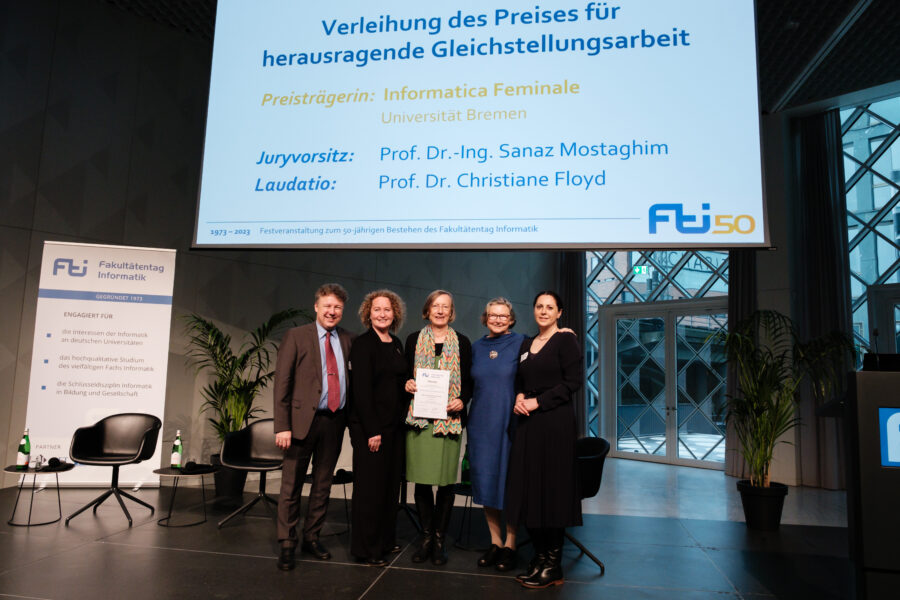
The German Faculty Conference of Informatics Faculties has awared its first Equality Prize (“Preis für herausragende Gleichstellungsarbeit”) to the Summer University Informatica Feminale of the Department of Mathematics and Informatics at Bremen University.
The awards ceremony with the laudatory speech by Professor Christiane Floyd is available as video and photos.

DEU, Berlin, 20.11.2023, Festveranstaltung 50 Jahre Fakultätentag Informatik: Die Zukunft der universitären Informatik, im Futurium [ (c) Wolfgang Borrs, www.borrs.de, info@borrs.de ]

Review of the Summer University 2024

We look back on the 25th International Summer University for Women in Computing. The Informatica Feminale took place at the University of Bremen in Germany from 14th to 29th August 2024.

Our thanks…
As organizer team we give special thanks to our lecturers for their teaching with full engagement and collegiality.

We were very pleased with the greeting and the warm, committed speech of Katharina Kunze, deputy State Women’s Representative of the Freie Hansestadt Bremen.

We were equally pleased with the interested and exchange-oriented participants who traveled to Bremen and actively participated in courses, excursions, discussions and the plenary session. Thank you very much for your support, networking and ideas!

We are especially pleased, that many grants could be given to student participants for the stay in Bremen.

Thank you so much to our sponsors who again supported us to realize some core elements of personal encounter for participants and lecturers.

Last but not least we want to thank our student assistants in Bremen. Whether in the conference office or in the cafeteria, you were a top team!

Our look back…
60 courses, each lasting several days, were offered on current specialist topics and interdisciplinary subjects. The wide range of teaching topics was aimed at women students and professionals in technical sciences as well as students of all subjects. There were basics and special topics in engineering, computer science, interdisciplinary topics as well as offers relating to studies, jobs and careers. The courses were very popular.

On place in Bremen, lecturers and participants could visit an extensive social program.

See more information in detail:

Additionally again, we arranged a smaller ‘meantime’ online course program during the whole year 2024.

We as organizers hope to comply with needs of lecturers and participants, as well as to strengthen again the core elements of teaching and learning with physical, personal meeting.

The women´s network Informatica Feminale and its sister Ingenieurinnen-Sommeruni is a place to exchange about technical and social developments, which we meet in our every-day life and which are designed by ourselves as technical experts. The Summer Universities want to give space and time for critical reflections and highly welcomes experimental debates on the relations of technological knowledge and developments in societies. We especially offer teaching, which deal with applications of technical know-how in spaces for work and life (for example within care, education, health, food, household, mobility, social networking, publicity, sports, militarization, etc.) from feminist perspectives.

All, who want to receive information about future Summer Universities, are invited to subscribe to our mailing list. Please send an email to ifis-summerschools@uni-bremen.de.

Companies with gender sensible organizational concepts and successful personal management strategies to promote women engineers to a broad spectrum of leading positions are invited to present their best practices to the participants of Informatica Feminale. There will be plenty of other opportunities to sponsor.

We invite you all to partcipate and look forward to welcoming you next summer in Bremen!

Greetings
Henrike Illig and Veronika Oechtering

[top]

Overview

The University of Bremen will organize the 28th Informatica Feminale – the international Summer University for women students and professionals in computer science. From 20 August to 4 September 2025 as program on place in Bremen, Germany.
Additionally, we will start a small meantime course program which will be online during the whole year 2025. Our focus will stay on physically personal meetings and communication which is the core of our concept.

We cordially invite women students of all disciplines, levels and different types of institutions of higher education as well as all women interested in computing and women ICT professionals from all over the world! Teaching languages will be English and German. For more information about how to participate, see our Informatica-Feminale-FAQ2025-en.pdf.

You will be able to register for the courses and social program of the summer universities via this webpage starting in May 2025:
https://www.informatica-feminale.de/re/en/registration.php

All courses of the summer school are on place in Bremen and there will be a participation fee.

For human resources managers we are particullarly pointing out that, during the whole summer school there will be plenty of opportunities to sponsor and to get in touch with graduates.

We are looking forward to meet keen and ambitious participants!

Review of the Summer University 2023

pink

We look back on the 26th International Summer University Informatica Feminale for Women in Computer Science/Informatics. It took place at the University of Bremen in Germany from 16th to 31st August 2023.

Our thanks…
As organizer team we give special thanks to our lecturers for their teaching with full engagement and collegiality.

Many thanks to all participants, who travelled to Bremen and enriched the summer university with lively discussion and networking.

We are especially pleased, that some grants could be given for the stay in Bremen. Thank you so much to our sponsors who again supported us to realize some core elements of personal encounter for participants and lecturers.

Last but not least we want to thank our student assistants in Bremen. Without you, we would not have been able to realize the summer university.

Our look back…
Some 50 courses in Computer Science, ICT, and Informatics were offered to women students in computing studies as well as to practitioners in the field. Students from other subjects got to know basic ICT and interdisciplinary course topics. There were basic, special and interdisciplinary course topics as well as course offers concerning studies, jobs and careers. On place in Bremen, lecturers and participants could visit an extensive social program.

See more information in detail:

Additionally again, we arranged a smaller ‘meantime’ online course program during the whole year 2023.

We as organizers hope to comply with needs of lecturers and participants, as well as to strengthen again the core elements of teaching and learning with physical, personal meeting.

The women´s network Informatica Feminale is a place to exchange about technical and social developments, which we meet in our every-day life and which are designed by ourselves as technical experts. The Summer University wants to give space and time for critical reflections and highly welcomes experimental debates on the relations of technological knowledge and developments in societies. We especially offer teaching, which deal with applications of technical know-how in spaces for work and life (for example within care, education, health, food, household, mobility, social networking, publicity, sports, militarization, etc.) from feminist perspectives.

All, who want to receive information about future Summer Universities, are invited to subscribe to our mailing list. Please send an email to if@informatica-feminale.de.

Companies with gender sensible organizational concepts and successful personal management strategies to promote women engineers to a broad spectrum of leading positions are invited to present their best practices to the participants of Informatica Feminale. There will be plenty of other opportunities to sponsor.

We invite you all to partcipate and look forward to welcoming you next summer in Bremen!

Greetings
Henrike Illig and Veronika Oechtering

[top]

Review of the Summer University 2022

Dear Participants, Lecturers, and Friends of the Summer Universities 2022,

we look back on a very special year. For the first time, the Informatica Feminale was organized in hybrid ways: online from 25 July to 5 August and physically in Bremen from 1 to 14 September 2022. Moreover, a special training program for lecturers about the topics privacy, facilitation, and protection from discrimination in teaching was offered online. On place in Bremen, lecturers and participants could visit an extensive social program.

Our thanks…
As organizer team we give special thanks to our lecturers for their teaching with full engagement and collegiality.

Many thanks to all participants, who enriched the summer university with lively discussion and networking. We are especially pleased, that participants travelled to Bremen despite the many obstacles in 2022. Courses were without fees again and some grants could be given for the stay in Bremen.

Thank you so much to our sponsors who again supported us to realize some core elements of personal encounter for participants and lecturers.

Last but not least we want to thank our student assistants in Bremen. Without you, we would not have been able to realize the summer university.

Our look back…
The year 2022 was the first, to organize the Informatica Feminale and the “sister” Ingenieurinnen-Sommeruni in both the formats online and physically in Bremen. Nearly online courses were fully booked. Courses on place in Bremen were taken to smaller extent, presumably because the Corona situation was to worsen further in September. Many courses could realize settings with few students and very intensive learning. We as organizers got the wonderful chance to intensive personal exchange with our guests. In September on place, we could also arrange a general assembly of lecturers and participants and we received many valuable hints for the year 2023.
We are also pleased, that the lecturers again followed with interest our special online training program for them about the topics privacy, facilitation, and protection from discrimination in teaching.

Our preview…
In 2023 we will emphasize the personal encounter and concentrate more on physical courses in Bremen. The summer university will be organized from 16-31 August 2023 at Bremen University. It will be our main activity. Additionally, we will arrange a smaller ‘meantime’ online course program during the whole year. We as organizers hope to comply with needs of lecturers and participants, as well as to strengthen again the core elements of teaching and learning with physical, personal meeting.

We invite you all to partcipate and look forward to welcoming you next summer in Bremen!

Greetings
Henrike Illig, Isabel Matthias, Veronika Oechtering

A Summary

The University of Bremen organized the 25th Informatica Feminale – the international Summer University for women in computer science – together with the 14th Ingenieurinnen-Sommeruni. From 25th July to 5th August as online courses and from 1st to 14th September 2022 on place in Bremen. The program of the Summer Universities 2022 included more than 60 courses. Furtheron a broad daily available social program was offered.

The listing below shows the courses in 2022

Courses on campus at Bremen University from 1 to 14 Sept 2022 (chronologically):
– Zielsetzung mit ZRM® – Motto-Zielen [Do 01.09. – Sa 03.09.2022]
– Sexismus – ohne mich! Ein Reflexions- und Argumentations-Workshop [Do 01.09. – Sa 03.09.2022]
– Spring im Einsatz [Do 01.09. – Sa 03.09.2022]
– Do it yourself! Feministisches Netzwerken und Empowerment [Do 01.09. – Sa 03.09.2022]
– Datenschutz und Datensicherheit — Aufbaukurs [Do 01.09. – Sa 03.09.2022]
– Hack your CAD models! Foundations of Computer Aided Design (CAD) with FreeCAD and Python / Hack your CAD models! Foundations of Computer Aided Design (CAD) with FreeCAD and Python [Do 01.09. – Sa 03.09.2022]

– Hilfe, ein Konflikt – weglaufen bringt nichts! [Mo 05.09. – Mi 07.09.2022]
– Regenerative Design – co-create the world with intelligent solutions [Mo 05.09. – Mi 07.09.2022]
– QM I – Grundkurs Qualitätsmanagement. QM-Methoden in Entwicklung, Produktion und Beschaffung [Mo 05.09. – Mi 07.09.2022]
– Introduction to Stream Processing Paradigm [Mo 05.09. – Mi 07.09.2022]
– Netzwerk- und Hardwarelabor – Teil 1 [Mo 05.09. – Mi 07.09.2022]
– Get cupcake: Create your own text adventure in python [Mo 05.09. – Mi 07.09.2022]
– Einführung in das Projektmanagement [Mo 05.09. – Sa 10.09.2022]
– Penetration testing and ethical hacking for beginners [Mo 05.09. – Sa 10.09.2022]

– Embodied Communication [Mi 07.09. – Sa 10.09.2022]
– And now what? Design your life and work [Mi 07.09. – Sa 10.09.2022]
– QM II – Aufbaukurs Qualitätsmanagement. Agile Prozessentwicklung [Mi 07.09. – Sa 10.09.2022]
– FIND YOUR INNER STRENGTH – Empowerment für deine berufliche Laufbahn [Mi 07.09. – Sa 10.09.2022]
– Raspberry Pi, heute mal als autonomer mobiler Roboter [Mi 07.09. – Sa 10.09.2022]
– Netzgekoppelte Photovoltaikanlagen in der Praxis [Mi 07.09. – Sa 10.09.2022]
– Netzwerk- und Hardwarelabor – Teil 2 [Mi 07.09. – Sa 10.09.2022]
– Klar hab’ ich was zu verbergen! Digitale Selbstverteidigung und Datensouveränität für mich und andere [Fr 09.09. – Sa 10.09.2022]

– Sprachverarbeitung – Verfahren und Anwendungen [Mo 12.09. – Mi 14.09.2022]
– Führung und Teamwork in Aktion [Mo 12.09. – Mi 14.09.2022]
– Dream it, think it, make it. A project-based introduction to 3D-printing, Open Source Hardware and the Concept of Fab City [Mo 12.09. – Mi 14.09.2022]
– QM III – Zertifikatskurs Qualitätsmanagement. Agile Projekte im QM. Zertifikatsprüfung „Applied Agile Quality Master“ [Mo 12.09. – Mi 14.09.2022]
– Grundlagen in Python [Mo 12.09. – Mi 14.09.2022]
– Linux Systems Management Schwerpunkt Firewall und Datensicherung [Mo 12.09. – Mi 14.09.2022]
– Datenschutz und Datensicherheit — Datenschutzaudits. Zertifikatskurs zum Datenschutz [online-Kurs Mo 26.09. – Fr 30.09.2022]

Online Courses in July and August 2022:
– Storyboard und Storytelling [Mo 25.07. – Di 26.07.2022]
– Big Data Analytics using Distributed Platforms [Mon 25th Jul – Thu 28th Jul 2022]
– Einführung in Python [Mo 25.07. – Fr 29.07.2022]
– Sketchnoting – Denken mit den Augen und Visualisieren von Hand [Mo 25.07. — 05.08.2022]
– Software-Entwicklung in der Medizin. Einblicke in den Alltag einer Informatikerin / Software development in medicine. Insights into the daily work of a computer scientist [Mo 25.07. – Fr 29.07.2022]
– How (not) to Master your Thesis – Akademische Arbeiten in technischen Fächern meistern [Mo 25.07. – Fr 29.07.2022]
– Scrum I – Agiles Projektmanagement. Rollen im Scrum Team, Theory of Scrum und Artefakte [Mi 27.07. – Sa 30.07.2022]
– Datenschutz und Datensicherheit – Grundkurs [Mi 27.07. – Sa 30.07.2022]
– Blockchains, Crypto & Web3 – eine praktische Einführung [Do 28.07. – Fr 29.07.2022]
– Bio? Das ist doch grün, oder nicht? – Nachhaltigkeit in der Prozessentwicklung [Do 28.07. – Sa 30.07.2022]
– Einstieg in die Kryptografie [Mo 01.08. – Do 04.08.2022]
– Wie wir Maschinen beibringen sexistisch zu sein – Ursachen, Probleme und Folgen von Diskriminierung durch Maschinelles Lernen/KI [Mo 01.08. – Fr 05.08.2022]
– Scrum II – Agiles Projektmanagement. Events, Sprints und Storyboard [Mi 03.08. – Sa 06.08.2022]
– Scrum III – Agiles Projektmanagement. Präsentation des Scrum-Projekts und Zertifikatsprüfung «Applied Scrum Master» [Mi 10.08. – Fr 19.08.2022]

Lecturer Program in June and July 2022:
– Antidiskriminierung und Diskriminierungsschutz [Mi 29.06.]
– Antidiskriminierung und Diskriminierungsschutz [Mo 04.07.]
– Basiskurs Datenschutz in der Lehre [Mo 04.07.]
– Interaktive Online-Lehre / Interactive & Engaging Online Facilitation [Mo 11.07.]
– Warum Technik nie neutral ist. Einführung und Austausch [Di 12.07.]
– Geschlechtergerechte und diversitätssensible Sprache in der Lehre [Mo 18.07.]
– Interaktive Lehre vor Ort bei den Sommerunis / Interactive Co-Located Sessions [Di 19.07.]
– Why Technology is Never Neutral. Introduction and Exchange [Wed 20th July]

[top]

Summer Courses and Registration

The University of Bremen will organize the 28th Informatica Feminale – the international Summer University for women students and professionals in computer science. From 20 August to 4 September 2025 as program on place in Bremen, Germany. Our focus will stay on physically personal meetings and communication which is the core of our concept.

You can register for the courses and social program of the summer universities via this website:
https://www.informatica-feminale.de/re/en/registration.php
starting from May 2025, with complete course descriptions and registration page.

Additionally, we offer a small meantime course program which will be online courses during the whole year 2025.

[top]

20 Aug (Wed) – Welcome

Welcome Event of the 28th Summer University Informatica Feminale and the 17th Ingenieurinnen-Sommeruni

Community live, IF-IS COM 01

Wedesday, August 20, 2025
Time: 12:00 – 1:50 p.m.
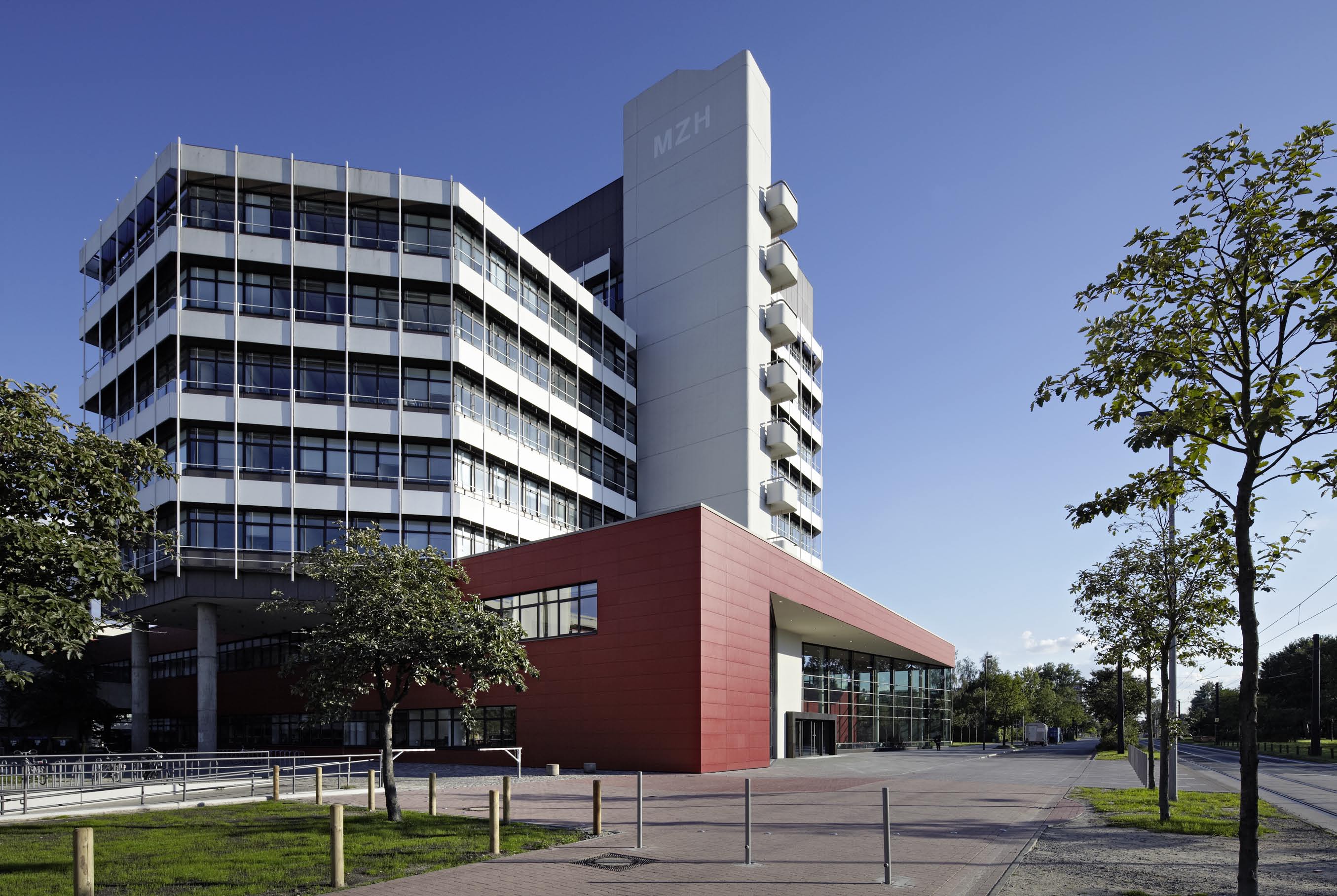
Room: Cafeteria MZH 1090
Language: The languages will be German and English.
Lecturers and Participants are welcome!

We would like to ring in the 28th Informatica Feminale and the 17th Summer University for Women in Engineering with all participants.

We are particularly looking forward to the opening of the international summer universities by the State Councillor for Environment, Climate and Science Mrs. Irene Strebl.

Afterwards, a warm lunch buffet will give everyone the opportunity to get to know each other, introduce themselves and get an insight into the coming three weeks.

– no registration required –

[top]

Register

The registration as participant of the summer school is possible via a common web-based registration system of the Informatica Feminale and the Ingenieurinnen-Sommeruni. The attendance of courses requires prior registration. You may attend several courses, but you will have to register for each course bindingly beforehand. In order to register, please select the courses which you’d like to attend from our website.

You can register for the courses and social program of the summer universities via this webpage (until May 2025 it will show the courses from last year for your information):

In 2025, we will additionally arrange a small meantime program, which will offer some online courses during the whole year.

Places will be assigned according to time of registration. First come, first served!

Your course registration will be confirmed via e-mail from the University of Bremen after completion of your registration process. Further information regarding the program procedure will be e-mailed as well. The lecturers will contact their students beforehand with materials necessary for preliminary course requirements.

Participants may select additional courses. As soon as a course is fully booked it will appear as blocked in the online registration system.

Throughout the summer universities we offer a free daily child care for the participants’ and lecturers’ children.

Participants of the summer school are charged a participation fee.

Liability Disclaimer
The organizers assume no liability for any damage to persons or to property, which is caused by participants or their children.

[top]

25 Years Informatica Feminale. Women’s Spaces in Computer Science – Experiences and Perspectives

Conference September 8th, 2022

In honor of 25 years of Informatica Feminale, the Center of Excellence Women in Science and Technology of the University of Bremen presented the conference „Women’s Spaces in Computer Science – Experiences and Perspectives“ on September 8th, 2022. The conference was part of the international summer university Informatica Feminale (1-14 September 2022; www.informatica-feminale.de).

Gender-political reforms in informatics have not lost their relevance. Monoeducative teaching and learning spaces like the summer university for women* are a part of enhancing gender equality in informatics / computer science. The Informatica Feminale focuses on educational structure and specialist cultures. It is a place for experimentation, for new impulses in studying informatics. Due to that, the Informatica Feminale developed into a summer university with an enormous reach, potency, and scope. In 25 years, an extensive network and multi-generational community have formed. Because of the continuous, strong orientation on specialization, the summer university’s resonance is still going strong.

The Informatica Feminale has become a beacon of gender-political reforms for gender in STEM.  The conference „Women’s Spaces in Computer Science – Experiences and Perspectives“ aims focus attention: Beginning with a review on 25 years of Informatica Feminale, we continue to the current situation of informatics in German universities, towards a preview of needed gender-political reforms.

The conference took place on the 8th of September 2022 from 11 am until 4 pm in House of Science in Bremen.

  • Greetings by
    – Senator Dr. Claudia Schilling, Senator of Science and Harbors of Freie Hansestadt Bremen,
    – Bettina Wilhelm, State Representative of Women of Freie Hansestadt Bremen, and
    – Rector Professor Dr. Jutta Günther, University of Bremen
  • Presentations by
    – Professor Dr. Juliane Siegeris, Hochschule für Technik und Wirtschaft Berlin University of Applied Sciences, and
    – Private lecturer Dr. habil. Sigrid Schmitz, Freiburg
  • Look back on 25 years of Informatica Feminale by Veronika Oechtering, Henrike Illig and Isabel Matthias
  • Panel discussion with
    – Professor Dr.-Ing. Karin Vosseberg, Bremerhaven University of Applied Sciences,
    – Dr.-Ing. Ingrid Rügge, University of Bremen,
    – Patricia Jung, Munich,
    – Veronika Oechtering, University of Bremen,
    Moderation: Henrike Illig, Universität Bremen.

In the evening, a dinner at the restaurant “Falstaff” in Bremen’s Neustadt offered opportunities for informal networking and exchange.

Review of the Online Summer Courses 2021

pink

Dear Participants, Lecturers, and Friends of the Summer Universities 2021,

again as last year, the 24th Informatica Feminale had to stay online and our plans for courses in Bremen were stopped.

But as always the lecturers were flexible, the students’ echos great, and from July to October, some 50 courses went ahead. Some course were booked out in hours after publication; others realized settings with few students and very intensive learning. Lecturers sent hardware for experiments to their students; participants organized their own lunch meetings and got happy about virtual networking.

Many thanks to the wonderful lecturers, who participated with full engagement. We are especially pleased, that you followed with interest our special online training program for lecturers about the topics privacy, facilitation, and protection from discrimination in online teaching.

Many thanks also to all the 180 participants for active participation, discussions, comments and criticism, networking and collegiality!
We as organizers have again learnt much about a reasonable design of the Summer University. Some courses with huge practical parts are difficult to realize online. At the same time we will support the wish of those participants, who for different reasons, would never have been able to travel to Bremen. In future, we will arrange weeks with online teaching as well as physical courses in Bremen. Hopefully, both the plans will be realized next year already!

But we miss you all – lecturers and participants – on place in Bremen. No cafeteria, no field trips, no guests. Next year, the 25th Informatica Feminale will be organized – a good reason to celebrate a “real” party.

We invite you all to partcipate and look forward to welcoming you next summer in Bremen!

Greetings
Henrike Illig, Isabel Matthias, Veronika Oechtering

The program of the Summer Universities 2021 included some 50 courses. The listing below shows all, sorted chronologically and along categories of topics. All the teaching and the social program were offered online. There were no participation fees in 2021.
Teaching and study times were different in every course – ongoing from 19th July until middle of October.

Upcoming courses  sorted chronologically:

– Einführung in die moderne Webentwicklung [Mi 18.08.- Fr 20.08.]
– Sexismus – ohne mich! [Do 19.08. ]

– Work-Out für Energieeffizienz im Haushalt [Do 19.08.- Do 26.08.]
– Gendersensible Sprache. Wie es geht und warum sie wichtig ist [Fr 20.08.]
– Python Basics [Fri 20 Aug – Sat 21 Aug ]
– Retro Computing – Eine Einführung in BASIC für den Commodore 64 [Sa 21.08.- So 22.08.]
– Scrum III – Agiles Projektmanagement. Agile Storyboard und Zertifikatskurs zu Scrum [Mo 23.08.- Mi 25.08., Fr 27.08.]

– 3D-Druck mit Blender – Herstellung von 3D-Objekten mit Blender und Resindrucker [24.08.- 14.09.]
– Einführung in die Programmierung mit Python [Mi 25.08.- Mi 22.09.] 
– Alle gleich? Diversität und Ungleichheiten im Studium [Fr 27.08.]
– Software development in medicine. Insights into the daily work of a computer scientist [Mon 30th Aug- Fri 3rd Sep]
– Wie nehmen Roboter ihre Umgebung wahr? Computer Vision und Bildauswertung für Robotersysteme [Mo 30.08.- Mi 08.09.]
– Wie frau einen Tiefseeroboter baut [Mo 30.08.- Do 23.09.]
– Datenschutz und Datensicherheit – Grundkurs [Mi 01.09.- Fr 03.09.]

– Einführung in das Projektmanagement [Do. 02.09.- Di. 07.09.]
– Functional Programming. Approach in Building Software Applications with Clojure [Fri 03 Sep – Sat 25 Sep]

– Sketchnoting. Denken mit den Augen und Visualisieren von Hand [So 05.09.- Mo 27.9.]
– Datenschutz und Datensicherheit – Aufbaukurs [Mo 06.09.- Mi 09.09.]

– Netzwerk- und Hardwarelabor [Mo 06.09. – Do, 09.09.]
– Prozessentwicklung im Qualitätsmanagement [Do 09.09.- Mo 13.09.]
– Sprachverarbeitung – Verfahren und Anwendungen [Do. 09.09.- Di. 14.09.]

– Introduction to Machine Learning [Sat 11 Sep – Sun 12 Sep ]
– Faire Elektronik in der Praxis – von den Rohstoffen bis zur selbst gelöteten Computermaus [Mo 13.09.– Mi 15.09.]

– IT-Forensik: Windows Analyse [Mo 13.09.- Fr 17.09.]
– Netzwerklabor, Teil 2, mit Wireshark [Mo 13.09. – Do, 16.09.]
– Datenschutz und Datensicherheit – Datenschutzaudits mit Zertifikatsprüfung [Di 14.09.- Do 16.09.]
– Hands on Deep Learning [Fri 17 Sep – Sat 25 Sep]
– Hands on – Programming own Bots and Systems for Smart Homes and Gardens [Mon 20 Sep – Thu 23 Sep ]
– Engineering for social transformation: climate change, technology and gender [Mon 20 Sept – Thu 23 Sept ]
– Introduction on the Android Operating System [Mon 20 Sep – Thu 23 Sep]
– Hack your CAD models! Foundations of Computer Aided Design (CAD) with FreeCAD and Python [Mon 20 Sep – Fri 24 Sep]
– Erfolgreich Verhandeln nach dem Harvard Konzept [Mi 29.09-Mi 13.10]
– Hilfe, ein Konflikt – Weglaufen bringt nichts! [Di 05.10-Sa 16.10]
– Embodied Communication [Mo 04.10-Fr 15.10]

Courses sorted along categories:

Nachhaltigkeit und Technologien / Sustainability and Technologies

  • Mobilität, Verkehr und Gesellschaft [Do 05.08.- Do 19.08.]
  • Engineering for social transformation: climate change, technology and gender [Mon 20 Sep – Thu 23 Sep]
  • Regenerative Design – co-create the world with intelligent solutions [Fri 06th Aug- Mon 09th Aug]

Erneuerbare Energie / Renewable Energy

  • Netzgekoppelte Photovoltaikanlagen in der Praxis [Do 05.08.- Di 10.08.]
  • Work-Out für Energieeffizienz im Haushalt [Do 19.08.- Do 26.08.]

Biotechnologie / Bioengineering

  • Klein, Kleiner, Mikro. Die kleinsten Reaktoren für Biokatalysatoren [Mo 02.08.- Fr 13.08.]

Technische Netze / Technical Networks

  • Netzwerk- und Hardwarelabor [Mo 06.09. – Do, 09.09.]
  • Netzwerklabor, Teil 2, mit Wireshark [Mo 13.09. – Do, 16.09.]

Robotik und Elektronik / Robotics and Electronics

  • Faire Elektronik in der Praxis – von den Rohstoffen bis zur selbst gelöteten Computermaus [Mo 13.09.– Mi 15.09.]
  • Hands on – Programming own Bots and Systems for Smart Homes and Gardens [Mon 20 Sep – Thu 23 Sep]
  • Wie frau einen Tiefseeroboter baut [Mo 30.08.- Do 23.09.]

CAD-Modellierung / CAD-Modeling

  • 3D-Druck mit Blender – Herstellung von 3D-Objekten mit Blender und Resindrucker [24.08.- 14.09.]
  • Hack your CAD models! Foundations of Computer Aided Design (CAD) with FreeCAD and Python [Mon 20 Sep – Fri 24 Sep]

Maschinelles Sehen / Computer Vision

  • Wie nehmen Roboter ihre Umgebung wahr? Computer Vision und Bildauswertung für Robotersysteme [Mo 30.08.- Mi 08.09.]

Datenanalyse / Data Analysis

  • Matrix-Based Programming and Data Visualization using Matlab or GNU Octave [Mon 26th July – Mon 09th Aug]

Maschinelles Lernen / Machine Learning

  • Einführung in maschinelles Lernen / Introduction to Machine Learning [Sat 11 Sep – Sun 12 Sep ]
  • Hands on Deep Learning [Fri 17 Sep – Sat 25 Sep]
  • Wie wir Maschinen beibringen sexistisch zu sein – Ursachen, Probleme und Folgen von Bias in Maschinellem Lernen/KI [fällt leider aus]

Programmieren / Programming

  • Retro Computing – Eine Einführung in BASIC für den Commodore 64 [Sa 21.08.- So 22.08.]
  • Functional Programming. Approach in Building Software Applications with Clojure [Fri 03 Sep – Sat 25 Sep]
  • Einführung in die Programmierung mit Python [Mi 25.08.- Mi 22.09.]
  • Build your own: Digitale Escape Games als Einstieg und Unterhaltung für Fachinteressierte [fällt leider aus]
  • Python Basics [Fri 20 Aug – Sat 21 Aug ]
  • Grundlagen in Python [Mo 26.07. – Do 29.07.]

Betriebssysteme und Infrastrukturen / Operating Systems and Infrastructures

  • Linux für Einsteigerinnen. Praktischer Einstieg in die Linux Nutzung [Mi 04.08.- Mi 11.08.]
  • Linux Systems Management Schwerpunkt Firewall [Mo 16.08. – Do, 19.08.]
  • Introduction on Android Operating System [Mon 20 Sep – Thu 23 Sep]

Projektmanagement / Project Management

  • Einführung in das Projektmanagement [Do. 02.09.- Di. 07.09.]
  • Storyboard und Storytelling [Di 20.07.- Do 22.07.]
  • Scrum I – Agiles Projektmanagement. Rollen im Scrum Team und Theory of Scrum [Mo 09.08.- Mi 11.08.]
  • Scrum II – Agiles Projektmanagement. Artefakte und Sprint [Mo 16.08.- Mi 18.08.]
  • Scrum III – Agiles Projektmanagement. Agile Storyboard und Zertifikatskurs zu Scrum [Mo 23.08.- Mi 25.08., Fr 27.08.]

Qualitätsmanagement / Quality Management

  • Qualitätsmanagement in Entwicklung, Produktion und Beschaffung [Fr 06.08.- Fr 20.08.]
  • Prozessentwicklung im Qualitätsmanagement [Do 09.09.- Mo 13.09.]

Datenschutz und Sicherheit / Privacy and Security

  • IT-Forensik: Windows Analyse [Mo 13.09.- Fr 17.09.]
  • Einstieg in die Kryptographie [Mo 26.07.- Do 29.07.]
  • Datenschutz und Datensicherheit – Grundkurs [Mi 01.09.- Fr 03.09.]
  • Datenschutz und Datensicherheit – Aufbaukurs [Mo 06.09.- Mi 09.09.]
  • Datenschutz und Datensicherheit – Datenschutzaudits mit Zertifikatsprüfung [Di 14.09.- Do 16.09.]

Mobile Web und Internet / Mobile Web and the Internet

  • Einführung in die moderne Webentwicklung [Mi 18.08.- Fr 20.08.]

Mensch-Computer-Interaktion / Human Computer Interaction

  • Sprachverarbeitung – Verfahren und Anwendungen [Do. 09.09.- Di. 14.09.]
  • Make a Chatbot. An Introduction to Natural Language Processing using Python [tba]

Gender und Diversity in der Technikinnovation / Gender and Diversity in innovating technology

  • Technofeministische Debatten und Theorien – ein Lektüre- und Diskussions-Workshop [tba]
  • Diskriminierung durch Algorithmen? Technikethische Reflexionen zu aktuellen Herausforderungen [Mi 04.08.- Fr 06.08.]

Ethik in der Technikgestaltung / Ethics in Technology Design

  • The Ethics of Technology. An Interdisciplinary Approach [tba]
  • Informatik & Verantwortung. Technik-ethische Reflexionen zur Entwicklung und Anwendung innovativer Technologien [tba]

Technik interdisziplinär / Interdisciplinary Technology

  • Software development in medicine. Insights into the daily work of a computer scientist [Mon 30th Aug- Fri 3rd Sep ]

Kompetenzen für Studium und Beruf / Professional Skills

  • And now what? Design your life and work [Fri 13th Aug- Fri 20th Aug]
  • Erfolgreich Verhandeln nach dem Harvard Konzept [Mi 29.09-Mi 13.10]
  • Find your inner strength. Empowerment für deine berufliche Laufbahn [Do 12.08.- Fr 20.08.]
  • Hilfe, ein Konflikt – weglaufen bringt nichts! [Di 05.10-Sa 16.10]
  • Genossenschaft – Unternehmensform, Gründung, Erfahrungen [Di 03.08. – Do 05.08.]

Gender- und Diversity-Kompetenzen / Gender and Diversity Skills

  • Alle gleich? Diversität und Ungleichheiten im Studium [Fr 27.08.]
  • Sexismus – ohne mich! [Do 19.08. ]
  • Do it yourself! Feministisches Netzwerken und Empowerment [fällt leider aus]

Schreiben / Writing Skills

  • Sketchnoting. Denken mit den Augen und Visualisieren von Hand [So 05.09.- Mo 27.9.]
  • How (not) to Master your Thesis. Akademische Arbeiten in technischen Fächern meistern [fällt leider aus]

Kommunizieren / Communicative Skills

  • Standpunkte vertreten. Gesprächsstrategien für den Unialltag [fällt leider aus]
  • Gendersensible Sprache. Wie es geht und warum sie wichtig ist [Fr 20.08.]
  • Embodied Communication! [Mo 04.10-Fr 15.10]

[top]

Review of the Online Summer Courses 2020

Glaeser

Dear Participants, Lecturers, and Friends of the Summer Universities 2020,

we look back on exciting months full of new intensive experiences: The 23rd Informatica Feminale went online! From July to Oktober 2020 some 50 courses got lots of applaus from student participants nearby and far away.

The International Summer University for Women in Computer Science at Bremen University switched to flexible online teaching in 2020 and the echos of participants were enormous. More than 230 students took part in courses, and were happy about online exchange, talks and discussions.

Our thanks…
As organizing team we thank our fantastic lecturers – the new as well as the familiar – for the exciting, personal and compact teaching.

Many thanks also to all the participants for active participation, discussions, comments and criticism, networking and collegiality. A big ‘Thanks’ goes to those, who for different reasons, would never have been able to travel to Bremen; but they sent us their joy about this online opportunities. We will now think about future ways to combine online and physical teaching in Bremen.

We are MUCH aware that online teaching is not at all comparable to the common, wonderful contacts between lecturers and students we all wish for every summer university. Not to be able to see you in person, to join you during lunch break, to go to excursions or to party together was a great pity and we were missing all of this and more.

Last but not least we warmly thank our student assistants team. It was good to have you as the only students in place at the University during the summer.

Our Review
Our focus 2020 brought some unexpected topicality:

“Boundaries of the Body” 
(Women’s) Bodies are sites of technological developments. Boundaries and limits become increasingly blurred: either through the optimization of health parameters, or the digital and technical enhancement of the body, up to unregulated collection of body-related data, and the bodies suffering the consequences of technology-based warfare. The Summer University 2020 wanted to give space and time for critical reflections and welcomed experimental debates on the relations of technological knowledge and developments in societies. We saw that several online courses integrated these topics.

Our motivation is to present the topics about gender diversity and feminist perspectives on teaching and society as cross-cutting issues, to integrate these into teaching and prevent these from “staying aside” of courses in separate courses.

Our Outlook…
We are curious to read your evaluations and to receive you suggestions. These will be taken into the planning of the next summer university year 2021.

The next upcoming online period will be a good moment to improve teaching methods. But we hope that at least a short version of summer university offers at Bremen will be possible.

We invite you all to partcipate and look forward to welcoming you next summer!

Greetings from Bremen,
Henrike Illig and Veronika Oechtering

See below the entire course program. Teaching and study times were different in every course – ongoing until October. We also prepared a social program with talks and discussions. There were no participation fees in 2020.

Short information about the published courses:

  • Python für Anfängerinnen (Mo 20.7.- Do 23.7.)
  • Wie wir Maschinen beibringen sexistisch zu sein – Ursachen, Probleme und Folgen von Bias in Maschinellem Lernen/KI (Mo 20.07.- Fr 24.07.)
  • Diskriminierung und Antidiskriminierung im Arbeitsleben – Probleme und mögliche Handlungsstrategien, (Di 21.- Do 23.7.)
  • How (not) to Master your Thesis – Akademische Arbeiten meistern (Mo 27.07.- Fr 31.07.)
  • Apps selbst entwickeln (Mo 03.08.- Fr 07.08.)
  • Diskriminierung durch Algorithmen? – Technikethische Reflexionen zu aktuellen Herausforderungen, (Di 04.-06.08.)
  • Qualitätsmanagement in Entwicklung, Produktion und Beschaffung (Mi 05.08.- Fr 19.08.)
  • Mikrocontrollerplatine programmieren: Calliope mini /Programming microcontroller board Calliope mini (Mo 10.08.- Di 11.08.)
  • Einführung in das Projektmanagement (Mo 10.08.- Sa 15.08.)
  • Grafisch programmieren mit Calliope mini (Teil 2) (Do 13.08.- Fr 14.08.) Sprachverarbeitung – Verfahren und Anwendungen (Fr 14.08.- Mo 17.08.)
  • Einführung in maschinelles Lernen /Introduction to Machine Learning (Fr 14.08.- Sa 22.08.)
  • Hands on Deep Learning (Fr 14.08.- So 30.08.)
  • Kreativitätstechniken und Ideenmanagement (Mo 17.08.- Di 18.08.)
  • Netzwerk- und Hardwarelabor, Teil 1 (Mo 17.08.- Mi 19.08.)
  • Einführung in die Strömungssimulation mit OpenFOAM / Introduction into Computational Fluid Dynamics using OpenFOAM (Mo 17.08.- Do 20.08.)
  • Software-Entwicklung in der Medizin. Einblicke in den Alltag einer Informatikerin (Mo 17.08.- Fr 21.08.)
  • Datenschutz und Datensicherheit (Mo 17.08.- Mo 24.08.)
  • Gender & Diversity als Schlüsselkompetenzen in Studium und Beruf (Mi 19.08.-Do 20.08.)
  • Netzwerklabor Teil 2 mit Wireshark (Mi 19.08.- Fr 21.08.)
  • Sexismus – ohne mich! Ein Reflexions- und Argumentations-Workshop (Fr 21.8.)
  • Prozessentwicklung im Qualitätsmanagement (Fr 21.08.- Mi 26.08.)
  • Erfolgreich Verhandeln (Mo 24.08- Di 25.08.2020)
  • Regenerative Design – mit intelligenten Konzepten die Welt verändern / Regnerative Design – co-create the world with intelligent solutions (Mo 24.08.- Mi 26.08.)
  • Einführung in Java (Mo 24.08.- Fr 28.08.)
  • Einführung in die Welt der Datenbanken und der Datenbankmanagementsysteme (Mo 24.08.- Sa 29.08.)
  • Dem Werkstoffversagen auf der Spur (Praxisorientierte Schadensanalyse) (Mi 26.08.- Fr 28.08.)
  • Und was jetzt? – Gestalte dein Leben selbstbestimmt (inclusive deiner Arbeit) / And now what? – Design your life and work (Do 27.08.- Sa 29.08.)
  • Alle gleich? Diversität und Ungleichheiten im Studium (Fr 28.08.)
  • Scrum Project: Agile Storyboard – Applied Scrum Master Certification (Fr 28.08.- Sa 05.09.)
  • Hilfe, ein Konflikt – weglaufen bringt nichts! (Mi 02.09.- Do 03.09.)
  • Einführung in die Programmierung mit Python (Mi 02.09.- Do 10.09.)
  • Bildanalyse mit Neuronalen Netzwerken / Image analysis with neural networks (Mo 07.09.- 10.09.)
  • Embodied Communication (Mo 14.09.- Di 15.09.)
  • Einstieg in Python (Mo 14.09.- Do 17.09.)
  • Programming for Data Analysis and Statistics with R (Mon 14.09.- Thu 17.09.)
  • Gendersensible Sprache. Wie es geht und warum sie wichtig ist (Fr 18.9.)
  • OpenSCAD (Sa 19.09.- So 20.09.)
  • Data Feminism – Erkundungen zwischen Cyber-, Xeno- und Technofeminismen (Mo 21.09.- Do 24.09.)
  • Grundlagen des Computer-Aided Design mit FreeCAD und Python / Hack your CAD models! Foundations of Computer Aided Design (CAD) with FreeCAD and Python (Mo 21.09.- Fr 25.09.)
  • Engineering for social transformation: climate change, technology and gender (Tue 22.09.- Wed 23.09.)
  • Let’s Play! Zoom-Theater, Telefon-Games und andere digitale Kulturformate (Mo 28.09.-Fr 02.10.)
  • Think Global, Act Local: the impact of the ‚New Urban Agenda‘ on our everyday life. (Tue 29.09.-Thu 01.10.)

[top]

Aims

The aim of Informatica Feminale is the sustainable professional integration of female experts in Informatics / Computer Science and ICT, which involves:

  • acknowledging equal participation of all genders in technology development
  • increasing the number of women students and graduates in computing studies;
  • attaining women lecturers;
  • connecting women students with professionals and supporting them during the transition into the labor market;
  • developing new impulses — especially for women — in Informatics / Computer Science in higher education.

The nature of our conceptual starting point is clearly professional. Our mission is to motivate women in Informatics / Computer Science to create a place of exchange for themselves and other women interested in this discipline. This includes exchange of technical knowledge as well as everyday academic and occupational issues. Informatica Feminale also allows room for personal exchange.

On our website you can get more information about the background and concept of the summer university.

[top]

Concept

A place for experimentation and professional exchange

By initiating ‘Informatica Feminale – Summer University for Women in Informatics’ in the year 1997 we have created a room for developing and exploring new methods for gender equality in the scientific sector. The nature of our conceptual starting point is clearly professional.

Our aim is to activate women in Informatics (Computer Science) to create a place of exchange for themselves and other women interested in this discipline. This exchange is based on professional and technical topics, but also includes a personal level by means of intensive communication.

Informatica Feminale is a place for experimentation and intends to imply new impulses in Informatics (Computer Science).

Three conceptual aspects of academic education – defining curricular fundamentals, training of students and encouraging lecturers – are closely connected in this approach. They connect studying, institutional structures and practices at a university. Technical subjects are strongly influenced by male interests. With the concept of the Summer Universities we want to support women at different academic and scientific operating levels to exert influence.

We regard academic and research content in Informatics as well as structures and practices at institutions of higher education as key factors in exclusion of women in Informatics. Therefore gender equality policies should not stop at considering the teaching of professional content, but must also regard changes in academic culture in terms of changing the ambience and structure in everyday education and research at universities.
This will be a long road, but professional networking is indispensable. Informatica Feminale should create opportunities for women to strengthen their influence on different academic and scientific operating levels.

Call for Contributions 2025 – an Invitation to all Women Experts in Computing!

The University of Bremen in Germany starts the 28th Informatica Feminale – the International Summer University for Women in Computing. It will be on place in Bremen from August 20 to September 4, 2025. Computer scientists from academia or industry and women working inter-disciplinarily in the field are cordially invited to develop and submit course offers for the summer university 2025.

Course offers can be submitted until February 10, 2025.
> Download Call for Contributions (pdf)

We invite interested lecturers to two online info meetings: on Tuesday, 21 January 2025 from 7:30 p.m. and on Wednesday, 22 January 2025 from 12:00 a.m. (both German time). The Zoom link will be mailed after your registration at ifis-summerschools@uni-bremen.de.

Topics from the broad field of Computer Science, ICT, and Informatics (theoretical, practical, technical or applied computing) are welcome.

The Informatica Feminale is an open, explorative teaching and learning environment. Topics such as entering higher education, developing a student career, transition into labor market and lifelong academic learning are addressed. Courses on elementary skills are in demand from undergraduate students. Combinations of theory and practical units – including excerpts to deepen regular courses – are of great interest. Special topics from all areas are also particularly welcome. Courses to strengthen the social skills of female students are also included.

Inter/national lecturers and students meet at the Informatica Feminale in Bremen to exchange and to use the summer universities as a place for experimentation, with the intention to develop and imply new impulses in computer science and informatics. The summer university is aiming at the professional networking of students and the advanced training for computer scientists on an academic level.

Lecturers could take the summer university as a test field for new teaching formats, to integrate topics such as sustainability into their computer science courses and to get experience with highly engaged and interested participants. Furthermore, a special training program for lecturers will be arranged. The Informatica Feminale is part of the regular course program at the University of Bremen. Teaching assignments can be given to lecturers.

The women’s network Informatica Feminale and its sister Ingenieurinnen-Sommeruni are a place to exchange about technical and social developments, which we meet in our every-day life and which are designed by ourselves as technical experts. Proposals from the field of computer science and its interdisciplinary subjects are welcome.

An important topic will be digital sustainability with focus on ecological and social impacts of digital technologies. Desired courses could address for example protection of natural resources and optimization within ICT systems and infrastructures, green coding, energy efficiency, recycling and circular economy, regulations and standardization, human rights and labor law in production processes, participatory design, development and consumption of ICT products or services that better serve the common good. We also welcome offers that teach basics about the sustainability goals of the agendas 2030 in UN and EU as well as about the cross-sectional dimension of gender equality.

We especially invite teaching offers, which deal with applications of technical know-how in areas of life and work (for example within care, education, health, food, household, mobility, social networking, publicity, sports, militarization, etc.) from feminist perspectives. Submissions on topics such as gender, equality, technology and ethics are highly welcome.

A program committee will decide on the contributions. We particularly encourage international lecturers to apply. Course languages are German and English.

Companies with gender sensible organizational concepts and successful personal management strategies to promote women engineers to a broad spectrum of leading positions are invited to present their best practices to the participants of the Informatica Feminale. There will be various chances to meet graduates of computer science and engineering at both the parallel summer universities Informatica Feminale and Ingenieurinnen-Sommeruni. Concurrently, we are offering multiple possibilities for sponsorship.

Please forward this Call for Contributions to interested colleagues, co-workers and students.

Hint:
In parallel to the Informatica Feminale, we will organize the Ingenieurinnen-Sommeruni, the Summer University for Women in Engineering. Your are invited to submit your course also there.
>Call for Contributions for the Ingenieurinnen-Sommeruni.

[top]

Inter/national transfers

From the beginning the inter/national success of Informatica Feminale has been unmistakable. In 2001, the national concept of Informatica Feminale at Bremen University was complemented by a regional summer school in the German Land Baden-Württemberg. Since then, the regional summer school is organized at University of Applied Sciences Furtwangen and University of Freiburg on a yearly basis: www.netzwerk-fit.de/informatica. Since 2008: www.scientifica.de

The Federal Ministery of Education in Austria started the support of a national summer university, similar to Informatica Feminale, in 2002. The first ditact_women´s IT summer studies Salzburg started in September 2003 and continues on a yearly basis until today: www.ditact.ac.at.

From 2004 to 2008 the the Computer Science Department at University of Waikato, Hamilton, New Zealand organized the Computing Woman Congress (www.cwc.org.nz), following the concept of and in cooperation with Informatica Feminale at Bremen University.

Ingenieurinnen-Sommeruni
The University of Bremen introduced the first national summer university for women in engineering in 2005: https://www.ingenieurinnen-sommeruni.de.
The Ingenieurinnen-Sommeruni has been continued since 2010 yearly and is now internationally visible with course offers in English and German.

More detailed information about the concept and history of Informatica Feminale can be found in German on this website.

Ideal lecturers

  • Women professors who are looking for motivated students to experiment with new concepts of teaching
  • Women researchers who prepare independent courses and would like to teach in a pleasant atmosphere
  • Women practitioners who would like to share their work experiences or to gain teaching experience for a university career
  • Women researchers and practitioners from different fields who deal interdisciplinarily with computer science
  • Students who would like to offer subject-specific discussions of experience
  • Experts offering orientation for students being in the course of their studies or preparing for the transition to working life.

Interested lecturers who apply for the first time for the Informatica Feminale in Bremen should give a short overview of their professional background. Furthermore, we ask for some personal information in the course submission form, which might be used for advertising the summer university in the program on the website.

[top]

Course Submission

Please submit your course proposals via the registration form.
Submission deadline: 12 April 2026

The summer university will take place in person at the University of Bremen. We are seeking proposals for multi-day courses, one-day workshops, and lectures.

Before completing the form, please read our information on
teaching methods and course types,
participants, and
requirements.

TEACHING LANGUAGES

In 2026 we wish again to gain the interest of international participants with courses in English and in German. More languages combined with these are welcome, too. You can offer your teaching only in German or only in English or combine these with other languages.

If you want to teach your course mostly in German, please use our
> submission form in German language.

If you want to teach your course mostly in English, please use our
> submission form in English language.

Other languages can be integrated in both of these forms.

[top]